
The true cost of an absent brand strategy
If you are a CFO or a business leader who holds the purse strings, the marketing budget is often one of the first things that comes under scrutiny when times get tight. And honestly, that is understandable. Marketing spend can feel intangible. The connection between dollars out and revenue in is rarely immediate or straightforward, and in a business where every investment needs to justify itself commercially, that ambiguity is uncomfortable.
But here is the thing. The reason marketing so often feels like a cost rather than an investment is not the marketing itself. It is the absence of a clear brand strategy behind it. Without that foundation, spend gets scattered across tactics that do not build on each other, messaging shifts with whoever is writing the brief that week, and the cumulative effect on the business is negligible. That is not a marketing problem. It is a strategy problem — and the financial consequences are very real.
What brand equity actually means in commercial terms.
Brand equity is one of those terms that gets used often and understood rarely. Brand equity is the commercial value your business has built in the minds of your customers and your market — beyond the physical assets on your balance sheet. It is the reason a well-known, trusted business can charge more for the same service than an unknown competitor.
Consider something as simple as a can of cola. Coca-Cola and an unbranded supermarket cola contain virtually the same product, yet Coca-Cola commands a price premium that has held firm for decades. The difference is not in the liquid — it is entirely in the brand.
The same principle applies in every B2B sector, including yours. Clients are choosing between businesses that, on paper, offer comparable services. Brand equity is what tips that decision, and justifies the price that comes with it. It is the reason customers return without needing to be sold to again. It is the reason your business development team gets meetings that others cannot get, and wins pitches against larger, better-resourced competitors. It is, in short, the accumulated return on every consistent, strategically aligned piece of communication your business has ever put into the world.
Brand building is not a soft pursuit. It is a long-term financial strategy. Businesses that invest consistently in brand over time outperform those that focus exclusively on short-term sales activation — not occasionally, but systematically and measurably. The evidence for this is substantial and well established across industries and market conditions.
The compounding effect of consistent brand investment.
One of the most important things to understand about brand strategy — and one that rarely gets communicated clearly to finance — is that its returns are not linear. They compound.
Every time your business shows up consistently and clearly in the market, it adds a small increment of recognition, familiarity and trust in the minds of your target audience. Individually, each increment is modest. Cumulatively, over months and years of consistent strategic investment, those increments build something genuinely valuable. Your business becomes easier to recall when a need arises. Your proposals carry more weight because the name is already known. Your pricing holds firmer because the perception of quality and reliability is already established.
This is the fundamental difference between marketing as a cost and marketing as an investment. A cost is consumed. An investment accumulates. Brand equity, built on a clear and consistent strategy, is an asset — one that appreciates over time and contributes directly to the long-term value of the business.
What a weak or absent brand strategy costs the business financially.
It is worth turning this around and looking at the downside, because the cost of not investing strategically in brand is just as real — it is simply less visible on a spreadsheet.
When brand strategy is absent, marketing spend does not accumulate into anything. Each campaign starts from scratch. Awareness built in one quarter dissipates before the next begins. Messaging changes with personnel, agency relationships or whatever trend is current, so nothing sticks.
The business development team is working harder than it needs to because the brand is not doing any of the heavy lifting ahead of the conversation. And pricing power erodes over time because there is no clear reason in the market’s mind why your business commands a premium.
In a sector like energy, mining or resources services — where contract values are significant, sales cycles are long and trust is the primary currency — the compounding cost of brand inconsistency is considerable. It shows up not on a single line in the P&L, but in longer sales cycles, thinner margins, higher business development costs and a client base that is transactional rather than loyal.
A clear strategy changes what every dollar can do
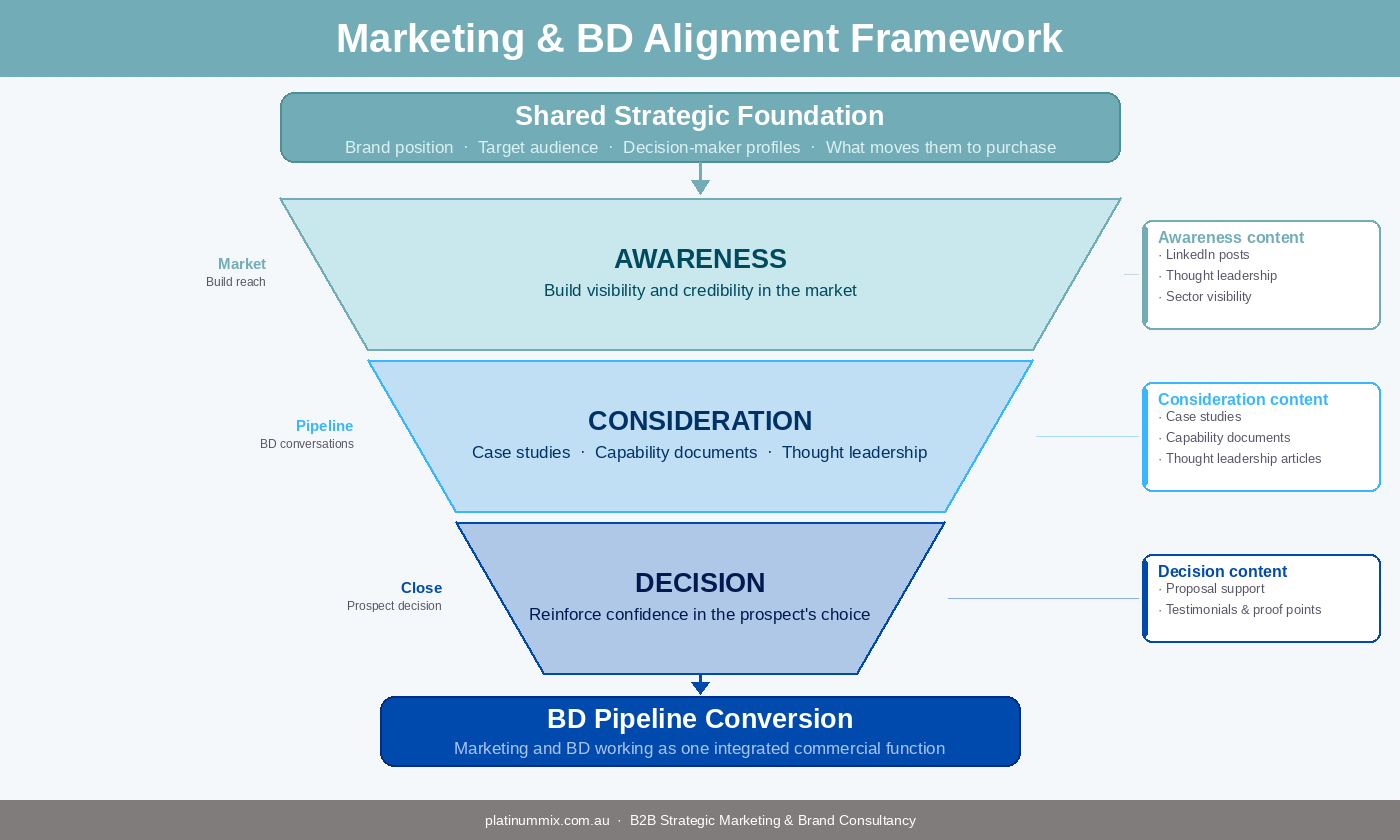
A business with a clear, well-defined brand strategy does not necessarily need to spend more on marketing. It needs to spend more deliberately. The same budget, deployed against a coherent strategic framework, produces significantly better returns than the same budget scattered across disconnected tactics. Channels reinforce each other. Messaging builds recognition over time rather than starting fresh each time. The business development team and the marketing function are telling the same story, to the same audience, in a way that compounds rather than cancels out.
Over time, that disciplined approach to brand investment builds an asset that shows up in the valuation of the business. Acquirers pay premiums for brands with strong market positions. Clients stay longer when they have a clear sense of what a business stands for. Staff are easier to attract and retain when the culture and values are coherently expressed. These are not marketing outcomes. They are business outcomes — and they have a dollar value.
The question worth sitting with.
Brand strategy is not a request for a bigger marketing budget. It is a framework for making the existing one work significantly harder and build lasting commercial value in the process.
So, here is the question worth considering before the next budget review. Is your current marketing investment accumulating into something — building recognition, trust and preference in your target market over time? Or is it being consumed, month by month, without leaving a lasting commercial impression?
If you are not sure of the answer, that uncertainty is itself worth exploring. Because the businesses that treat brand as an investment rather than a cost are not just better marketers. They are, over time, worth more.
Related Posts
- platmixdev
- January 16, 2026
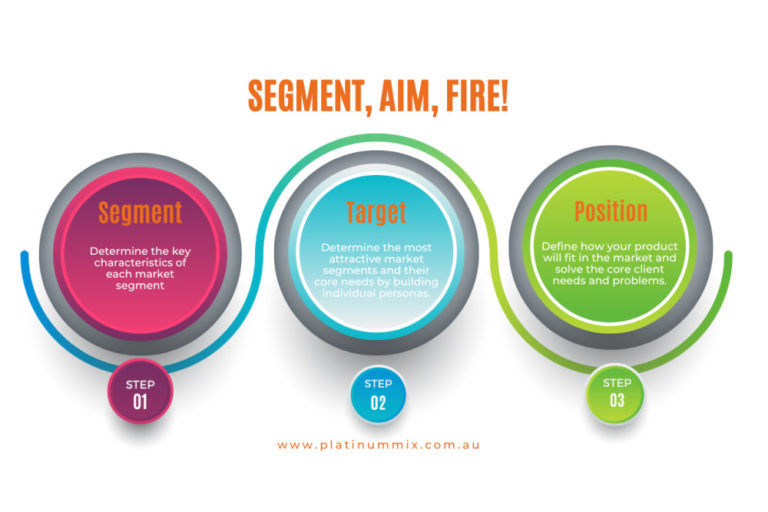
Segment, aim and fire!

Leave A Comment Cancel reply
You must be logged in to post a comment.